
Bulletin of the Atomic Scientists, October 5th 2026
Posted: 7th October 2026


October 5, 2026
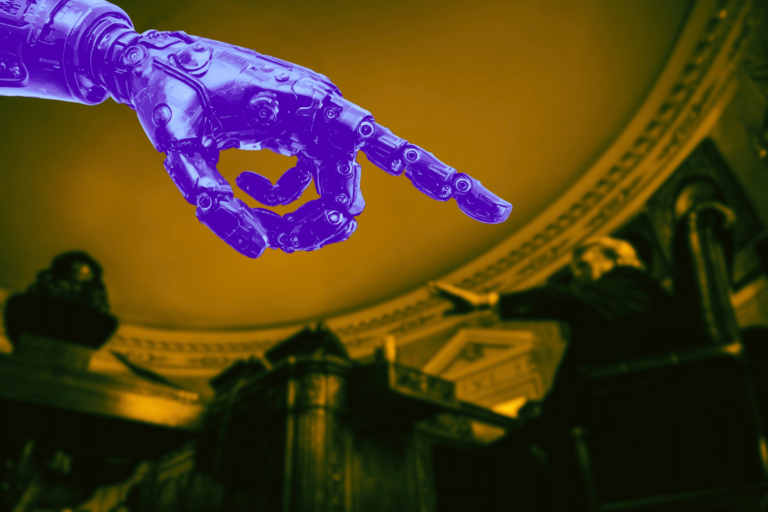
Current AI systems could trigger nuclear war by amplifying human cognitive blind spots, speeding up escalation spirals, and overwhelming decision-makers with a firehose of information during high-stakes crises. (Illustration by François Diaz-Maurin; source images from The White House and canva.com)
AI doesn’t need ‘superintelligence’ or evil intent to start a nuclear war
Even without runaway superintelligence or malicious intent, current AI systems risk triggering nuclear war, write Paul Slovic and Herbert Lin. “A machine can flood decision makers with information—some true, some false—that they struggle to evaluate but feel compelled to act on.” Read more.
How many nuclear weapons does India have in 2026?
In the latest edition of the Nuclear Notebook, experts from the Federation of American Scientists Hans M. Kristensen, Matt Korda, Eliana Johns, and Mackenzie Knight-Boyle provide an in-depth examination of India’s nuclear stockpile and plutonium production. Read more.
Advertisement

IN THE NEWS
Scholar’s thoughts on Hugging Face widely cited
Eryk Salvaggio’s recent Bulletin analysis questions the narrative around the Hugging Face incident and has been cited in major newspapers, from The New York Times to The Washington Post, reports Gates Cambridge. Read more.
WHAT’S NEW AT THE BULLETIN
Ruth Tucker joins the Bulletin
The Bulletin is thrilled to welcome Ruth Tucker as the nonprofit’s advancement services coordinator. She brings a culturally conscious perspective to research, engagement, and analysis, which she has applied at the New Jersey Department of Environmental Protection and most recently at the Field Museum of Natural History. Read more.

VIRTUAL EVENT
The Web World Wide: The Impact of the Internet
Even though the internet has made some aspects of life better, do we need to log off to fix climate change? To protect our grid and our information? To maintain the very nature of society? On October 14, join the Bulletin as we debate whether the costs of the internet have begun to outweigh the benefits. Register.
CHICAGO EVENT
Watch the PBS Documentary BOMBSHELL in Chicago and hear from the filmmakers
BOMBSHELL investigates how the US government censored reporting to control the narrative about the atomic bombings of Japan, while minimizing the horrific human toll. On October 20, join us for a screening of the film, followed by a discussion and Q&A with filmmakers Ben Loeterman and Gaia De Simoni. Register.
Recent articles
-
How the bad science of AI doomerism is good for big business
-
M. Patrick Yingling joins the Bulletin’s Governing Board
- Thomas Graham Jr. helped build an arms control system now under strain
- Why the world’s top nuclear nation is sitting out the hype on small reactors
- Trump and Xi agreed on “strategic stability.” They now need to decide what it means