
Gaza: Daring to Dream
Posted: 11th October 2025
 Aman Sethi
Editor-In-Chief
Can our humanity recover from the genocide in Gaza? From the killing of over 67,000 Palestinians, from an engineered famine in which civilians are attacked as they line up for food, from an ancient land being reduced to rubble?
On 7 October 2023, Hamas fighters killed over 1,200 people in southern Israel and took 251 people hostage. Two years later, the scale and brutality of Israel’s response are still hard to comprehend. The events in Gaza, as writer Pankaj Mishra said earlier this year, signify “the kind of extensive moral and political breakdown that we may not recover from in our lifetime”.
Yet somehow the people of Palestine continue to embody a humanity that has eluded almost all our governments, much of our media, and a vocal section of our intelligentsia.
In this week’s openDemocracy newsletter, Hassan Herzallah, a Palestinian writer and translator from Rafah, who is currently living with his family in a camp in southern Gaza, describes two years “in which life has been on hold. Every day we have asked ourselves the same question: will this nightmare ever end?”
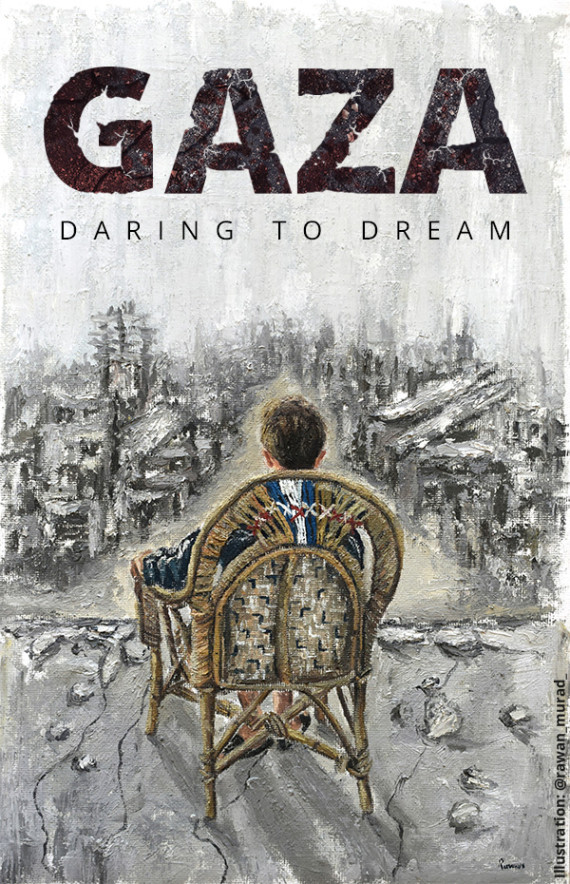
This sentiment was echoed by Rawan Murad, a 27-year-old artist from Gaza, who painted the cover art for this issue. “Art often feels like a luxury during war, and at times it seems meaningless,” Murad told us. “But I’m trying to live and keep creating. I’m trying to carry on.”
In a special episode of our In Solidarity podcast, openDemocracy’s Africa editor, Ayodeji Rotinwa, and journalist Lila Hassan discuss a difficult question that needs to be confronted head-on: did Western media manufacture consent for Israel’s genocide in Gaza?
Yet the Global South cannot evade responsibility for watching from the sidelines. This week, we are also publishing a piece by international affairs journalist Dacil Lanza that explores the uncomfortable divisions over Gaza among the Latin American left, and a report on an Israeli effort to “whitewash” its reputation in Ghana with a film festival by Accra-based journalist Delali Adogla-Bessa.
And as Israel and Hamas agree to another shaky ceasefire, we think it’s worth revisiting a piece from our archives by defence expert Paul Rogers, who warned in January that the consequences of the attacks on Gaza will be felt long after the fighting stops.
Finally, it bears repeating: a genocide has occurred in our time, in front of our eyes.
Daring to dream after two years under fire: Life in Gaza • Hassan Herzallah
Growing up in Gaza, my friends and I often heard older relatives’ stories of the Nakba; learning about the homes that Israeli troops forced them out of in 1948, and the keys they forever carried with them in hopes of returning. We never imagined that we would one day carry this pain ourselves.
For the last two years, history has repeated itself before the eyes of the world. Those of us in Gaza who have survived the Israeli genocide have lived a new Nakba, not knowing where to go or if we will ever return home.
This has not been one war, but multiple wars happening at once. It is the war of relentless bombing that destroyed homes and neighbourhoods, the war of forced displacement that has pushed hundreds of thousands into the unknown at a moment’s notice, and the war of tents that offer no protection from the scorching summer heat or the cold and rain of winter.
As we hear news of a ceasefire, we’re caught between feeling joy and fear – between believing and doubting…
In Ghana, an Israeli attempt to whitewash Gaza genocide faces pushback • Delali Adogla-BessaThe heavy security leading to Silverbird Cinema in the Accra Mall was the first thing cinemagoers noticed. Over a dozen police officers stood, mostly in pairs and all armed with assault rifles, along the staircase running from the ground floor into the cinema. Their presence in the normally peaceful shopping centre in the Ghanaian capital was so unusual that people stopped to stare.
openDemocracy understands the festival was paid for by the Israeli embassy in Accra, though the embassy refused to answer our questions on whether there were any other financial contributors, saying: “We do not have the permission of the sponsors to do that.”
Before the event started, a coalition of activists had urged Silverbird to cancel it in light of Israel’s war crimes. When their efforts failed, they announced on social media that they would protest it instead…
From the archive: Gaza ceasefire may hold but Israel created a bitter enemy for generations • Paul RogersWhen Hamas launched its assault into southern Israel on 7 October 2023, it quickly became evident that Netanyahu’s government was gearing up for all-out war. But what was also strikingly clear was the similarities between Israel’s response and the US rush to war after the 9/11 terrorist attacks, as well as its subsequent abject failure to bring peace.
Indeed, twenty-two years earlier and a few days after 9/11, I wrote in openDemocracy that: “The group responsible for the [9/11] attacks has engaged in detailed planning over many months and has substantial numbers of supporters with total dedication to its aims. A core aspect of the current situation is that the group responsible for the attacks needs a strong US counter-reaction. Indeed this should be recognised as one of the prime motivations for the attacks.
Replace “US” in that quote with “Israel” and the fit is uncomfortably close. Netanyahu vowed to dismantle and destroy Hamas piece by piece in retaliation for what he deemed a barbaric attack by “human animals” – echoing the rhetoric used by the US following the 9/11 terrorist attacks…
Cries and silence: Latin American progressives divided on criticism of Israel • Dacil LanzaLast month, Colombian president Gustavo Petro used a megaphone to support pro-Palestinian protesters on the streets of New York while wearing a keffiyeh. Days earlier, his Chilean counterpart, Gabriel Boric, had told the UN General Assembly that he wanted to see Israeli prime minister Benjamin Netanyahu brought before the International Court of Justice.
These were powerful moments. But after two years and 67,000 Palestinians killed, Israel’s war on Gaza still has not elicited the same unanimous condemnation among Latin America’s progressive parties and governments as the South African apartheid did in the twentieth century.
While Petro and Boric, as well as Brazilian president Luiz Inácio Lula da Silva and Mexican foreign minister Juan Ramón De la Fuente Ramírez, denounced Israel’s attacks on Gaza as “genocide” at the UN last month, other leaders of the so-called regional progressivism have avoided using such language…
Did Western media manufacture consent for Israel’s ongoing genocide of Palestinians in Gaza?
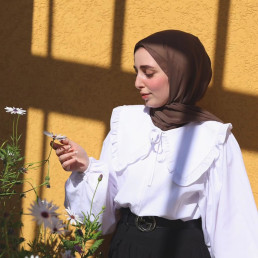
About the illustrator
The cover art for this issue was painted by Rawan Murad, a 27-year-old from Gaza, who tries to use art to document the challenges of living through war.
“During the two years of war, I have lived through intense pain and very harsh conditions, which led me to stop producing artwork for a long time, and I only managed to draw a little. Art often feels like a luxury during war, and at times it seems meaningless,” she said. “But I’m trying to live and keep creating. I’m trying to carry on, and I hope the war ends as soon as possible.”
Rawan added: “Currently, we have been displaced from Gaza once again and are now living in tents. The situation is very difficult. I hope we can return home. I wish I could live a normal life with a house, electricity, water, and peace.”
You can follow Rawan and find more of her work on Instagram @rawan_murad_