
Bulletin of the Atomic Scientists, March 26th 2026
Posted: 26th March 2026
Read a shareable version of this newsletter in your browser.

Presented in partnership with

March 26, 2026
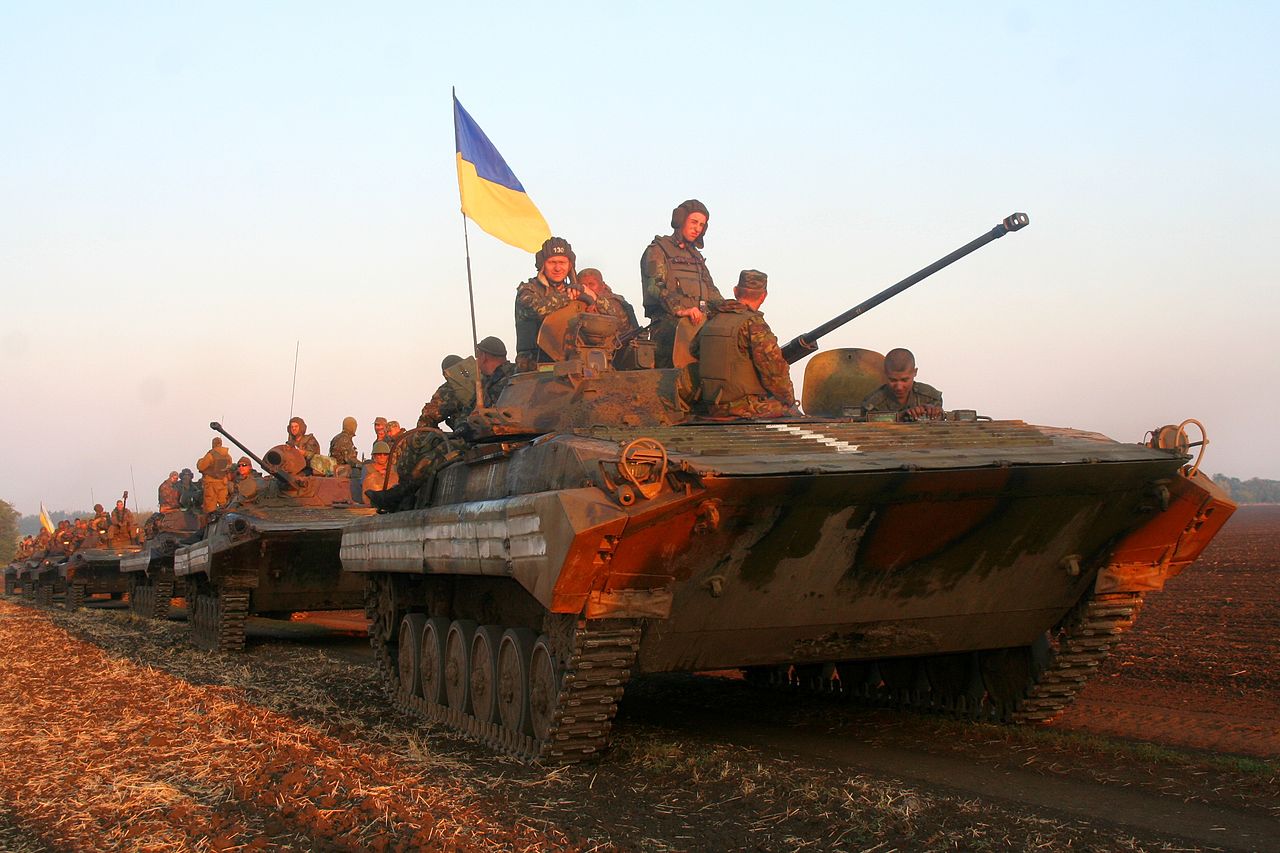
A military drill by Ukrainian tank crews in eastern Ukraine, prior to the latest hostilities with Russia. (File photo courtesy of Ministry of Defense of Ukraine, under Creative Commons Attribution-Share Alike 2.0 Generic license.)
At the brink: How Moscow’s ‘dirty bomb’ disinformation campaign risked a NATO-Russia war in October 2022
In October 2022, the world was very close to a second Cuban Missile Crisis, writes Polina Sinovets. Russian forces were on the brink of collapse in Ukraine, Putin’s regime was at risk, and he started talking about using a tactical nuclear weapon on the battlefield—which he tried to justify by saying that it would only be in response to the exploding of a dirty bomb by Ukraine (although there was no evidence for the existence of such a Ukrainian dirty bomb). This Bulletin magazine article is available to all readers.
Why politics, money, and construction capacity will limit any European turn toward nuclear power generation
The EU hopes to reestablish the role nuclear power played in Europe’s electricity grid when it provided about a third of the bloc’s electricity supply. But, Mark Hibbs and Miles Pomper argue that Europe’s industrial capacity, financial challenges, and politics are major obstacles to a European nuclear renaissance. Read more.
The cost of Trump’s war on wind
Federal permitting delays and recent stop-work orders under the Trump administration have slowed construction of several offshore wind projects while essentially freezing further investment in many others, write Dennis Wamsted and Seth Feaster. Read more.
Advertisement
2025 Annual Report
The Bulletin marked its 80th year in 2025. See some of the highlights and our growing impact in our newly released annual report. Read more.
Essay about nuclear energy versus renewables omits crucial fundamentals
Amory Lovins argues that solar or wind plus backup is the cheapest source of bulk power—not nuclear energy. And as for renewables’ so-called ‘intermittency problem,’ energy storage just got so cheap that three-fourths of India’s recent capacity additions were in the form of solar plus batteries. Read more.
IN CASE YOU MISSED IT
Judges aren’t buying claims that wind farms threaten national security, for good reason
The supposed national security threat that the Trump administration has used as an excuse to try to kill five energy projects that would provide cheaper, cleaner electricity to 20 states and Washington, D.C. is largely a mirage, writes Jessica McKenzie. Read more.
UPCOMING EVENT
A nuclear renaissance?
Join the Bulletin and the Chicago Council on Global Affairs on March 30 for a discussion on nuclear power, geopolitics, and energy security. Speakers include University of Chicago professor and member of the Bulletin’s Board of Sponsors Robert Rosner, the Illinois Commerce Commission’s Doug Scott, and Bulletin senior advisor and Council senior fellow Rachel Bronson. Register here.
Recent articles
- AI in the information ecosystem and its impact on nuclear escalation
-
A clarinetist, a high school student, and four climate deniers write a science paper, with a little help from AI…
- Announcing the 2025 Rieser Award recipient
- NIH modernization could expose biosafety gaps
- Revisionism at Fordow: Why the WSJ is wrong about the history—and future—of Iran’s nuclear program
QUOTE OF THE DAY
“If it’s relatively easy to do, to bend aluminum, to 3-D print, a basic motorcycle engine, then it’s harder to track where it’s coming from.“
— Maximilian Bremer, a nonresident fellow at the Stimson Center, ”’In Iran War, Cheap Drones Remain Wild Card,” The New York Times
PRESENTED IN PARTNERSHIP WITH
ICWA Nuclear Disarmament Education Fellowship
The Institute of Current World Affairs is accepting applications for a two-year independent research and writing fellowship abroad for an outstanding young professional pursuing a career in nuclear disarmament.
Your gift fuels our mission to educate and empower. Together we will work to ensure science serves humanity.
Give today