
Bulletin of the Atomic Scientists, March 30, 2026
Posted: 30th March 2026
March 30, 2026
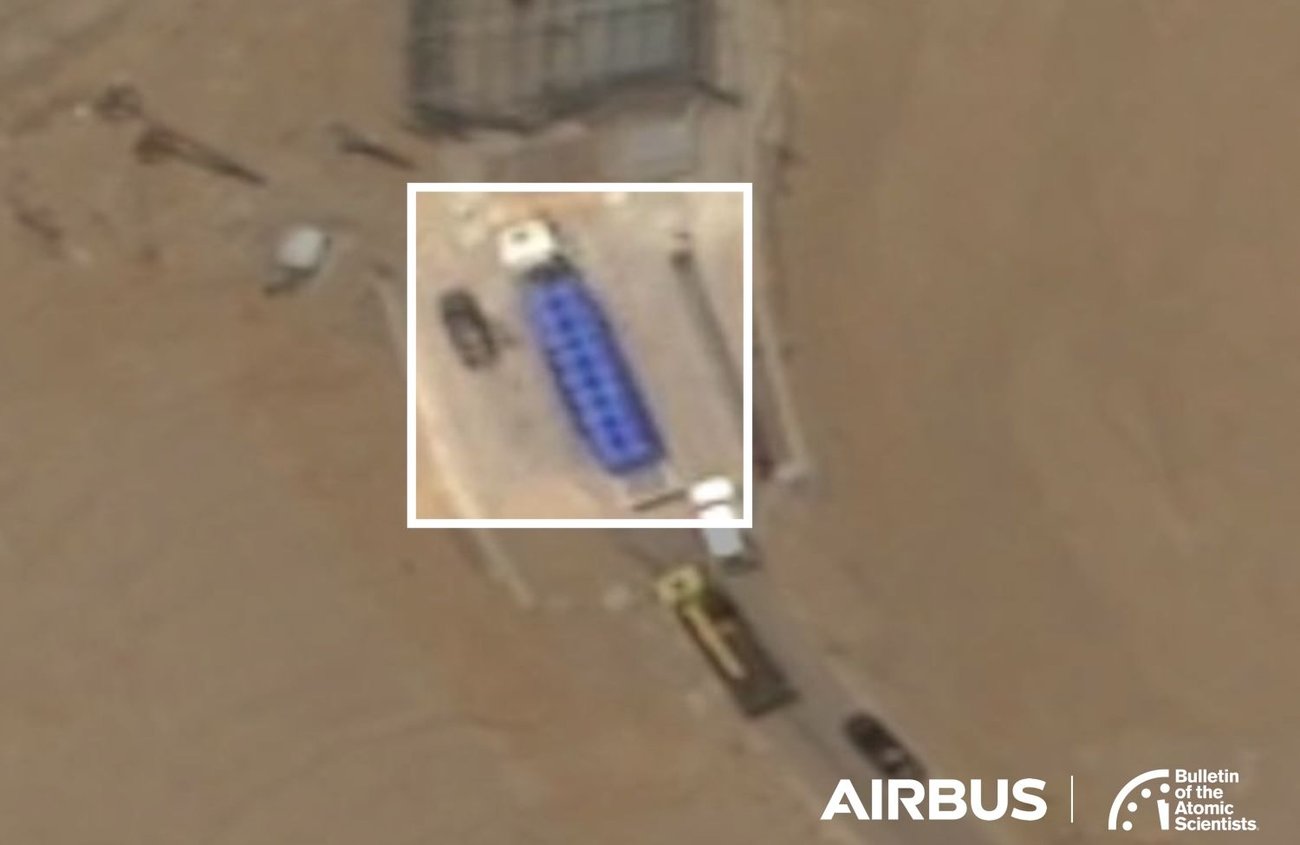
A very high-resolution satellite image shows a truck loaded with 18 containers likely transporting highly enriched uranium in front of the south tunnel entrance at the Isfahan underground complex in Iran (32.585522° N, 51.814933° E) on June 9, 2025. (Credit: Bulletin / Airbus Pleiades)
Analysis: Iran likely transferred highly enriched uranium to Isfahan before the June strikes
Satellite imagery shows that Iran could have transferred up to 540 kilograms—possibly all—of its highly-enriched uranium inventory to Isfahan before the June strikes last year. Bulletin nuclear editor François Diaz-Maurin lays out the evidence in a new analysis. Read more.
How AI use in scholarly publishing threatens research integrity, lessens trust, and invites misinformation
Since 2023, a significant number of published scholarly papers show signs of having been edited using AI tools, writes Andrew Gray. These tools are also being used to review papers and in search and discovery tools, in ways that are not always well understood. Consequently, academic databases are starting to show signs of being affected by AI-generated hallucinated research—placing additional stresses on the integrity of the scholarly publishing system, potentially making it more vulnerable to organized and intentional disinformation campaigns. Read more.
From medicine to ambulances, how the Iran war is exposing US health care vulnerabilities
Kristen Cline examines how Iran and its allies are exposing vulnerability in the US health care system with tactics ranging from choking off trade in drug ingredients in and around the Strait of Hormuz to launching a cyber attack on a company making systems for ambulances. Read more.
Advertisement
The misguided quest for nuclear weapons in Nordic countries
Nordic countries should not contribute to increasing the existential dangers that nuclear weapons already pose to European and global security, argue Tytti Erästö, Vladislav Chernavskikh, and Vitaly Fedchenko. Read more.
What can biosecurity learn from cybersecurity? A lot.
Measures meant to mitigate human-made biological risks remain anchored in conceptual frameworks like arms control agreements and export controls. Filippa Lentzos and Tim Stevens write that these are increasingly misaligned with the challenges emerging from rapidly advancing biotechnology. Read more.
Senseless obloquy: Benjamin Wilson’s false and incoherent vilification of Hans Bethe and Richard Garwin
Tom Garwin argues that his father, Richard Garwin, and fellow scientist Hans Bethe were misportrayed in an earlier Bulletin piece. In this essay, he writes about their legacies and contests the earlier argument. Read more.
UPCOMING EVENT
A nuclear renaissance?
Join the Bulletin and the Chicago Council on Global Affairs today at 5:30 p.m. CT for a discussion on nuclear power, geopolitics, and energy security. Speakers include University of Chicago professor and member of the Bulletin’s Board of Sponsors Robert Rosner, the Illinois Commerce Commission’s Doug Scott, and Bulletin senior advisor and Council senior fellow Rachel Bronson.
Register to attend virtually or in person.
Recent articles
- 2025 Annual Report
- At the brink: How Moscow’s ‘dirty bomb’ disinformation campaign risked a NATO-Russia war in October 2022
- Why politics, money, and construction capacity will limit any European turn toward nuclear power generation
- The cost of Trump’s war on wind
- Essay about nuclear energy versus renewables omits crucial fundamentals
QUOTE OF THE DAY
“It’s sort of a weird thing, because on principle, if we’re studying climate change, to not name climate change feels dirty.”
— Trent Ford, the state climatologist for Illinois and a research scientist at the Illinois State Water Survey at the University of Illinois Urbana-Champaign, “To keep climate science alive, researchers are speaking in code,” Grist
Your gift fuels our mission to educate and empower. Together we will work to ensure science serves humanity.
Give today